
Lets say hello to vitamin B
Think of vitamin B as a popular group of vitamins rather than a single vitamin. it is like a superhero team where each member has their own special power to help keep your body healthy and functioning properly. together, they make a powerful squad that your body can count on.
Vitamin B = happiness
Vitamin B is a multitasking superhero team that combines the power of 10 to help fuel your body’s metabolism, maintaining healthy skin and brain cells and support the creation of new blood cells
”Indeed vitamin B is a powerhouse of nutrition”
But did you know that the team of 10 under vitamin B has their own unique benefits that’s collectively known as B complex vitamins , these 8 nutrients work together to support a wide range of bodily functions, making them an important addition to any healthy diet.
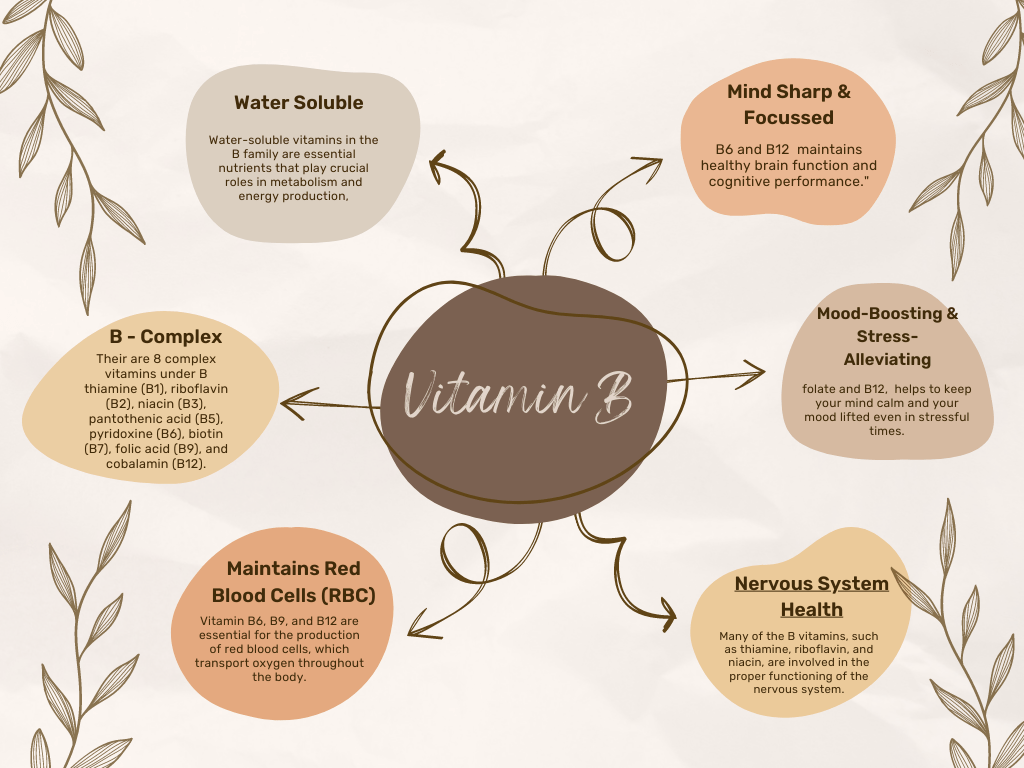
the 10 B-complex vitamins along with the names, functions and food sources.
| Vitamin | Name | Function | Food sources |
| B1 | Thiamine | Helps convert food into energy | Whole grains, nuts, seeds |
| B2 | Riboflavin | Supports healthy skin and eyes | Dairy, eggs, leafy green vegetable |
| B3 | Niacin | Supports healthy digestion and nerve function | meat, fish, nuts, legumes |
| B5 | Pantothenic acid | Helps form hormones and supports healthy skin | meat, fish, poultry, whole grains |
| B6 | Pyridoxine | Supports brain function and help makes hormones | chicken, fish, potatoes, bananas |
| B7 | Biotin | Supports healthy hair skin and nails | egg yolks, nuts, whole grains |
| B9 | Folate | Important for fetal development and supports healthy blood cells. | leafy green vegetable, beans, fortified cereals, grains, dairy products, meat, fish |
| B12 | Cobalamin | Helps make RBC and important for healthy nerve function | Meat, fish, poultry, dairy products, fortified cereals |
Daily intake of Vitamin B
The daily requirement for vitamin D can vary depending on a person’s age, sex, and health status. following is a chart that outlines the recommended daily intake of vitamin B for various ages, sexes, and life stages, including pregnancy and breastfeeding:
|
0.2 – 0.3 mg |
0.3 – 0.4 mg |
2 – 4 mg |
1.7 – 1.8 mg |
0.1 – 0.3 mg |
5 – 6 mg |
65 – 80 mg |
0.4 – 0.5 mg |
||||||||||
|
0.5 – 1.2 mg | 0.5 – 1.3 mg | 9 – 16 mg | 2 – 5 mg | 0.5 – 1.5 mg | 12 – 20 mg | 150 – 400 mg | 0.9 – 2.4 | ||||||||||
|
1.1 – 1.2 mg | 1.1 – 1.3 mg | 14 – 16 mg | 5 mg | 1.3 – 1.7 mg | 30 – 100 mg | 400 – 600 mg | 2.4 mcg | ||||||||||
|
1.4 mg | 1.4 mg | 18 mg | 6 mg | 1.9 mg | 35 mg | 600 mg | 2.6 mg | ||||||||||
|
1.4 mg | 1.6 mg | 17 – 18 mg | 7 mg | 2.0 mg | 35 mg | 500 – 600 mg | 2.8 mg | ||||||||||
Deficiency of Vitamin B
Vitamin B deficiency occurs when the body doesn’t get enough of one or more types of vitamin B. This can lead to a range of health problems, as each type of vitamin B plays a unique role in the body. Whether you’re a meat-eater or a plant-based enthusiast, there are plenty of ways to ensure you’re getting all the B vitamins your body needs to thrive.
Think of your body as a big, busy city, with different parts playing different roles to keep everything running smoothly. The B vitamins are like the workers in this city, each with a specific job to do. For example:
- Thiamine (B1) is like the city’s energy supplier, providing the power needed to keep everything moving. the deficiency of thiamine(B1) leads fatigue and muscle weakness.
- Riboflavin (B2) is like the city’s maintenance crew, fixing up any damaged areas and keeping everything in good condition. A deficiency in riboflavin (B2) can cause cracked lips, sore throat, and inflamed tongue.
- Niacin (B3) is like the city’s security team, protecting against any unwanted intruders. Niacin (B3) deficiency can cause a condition called pellagra, which is characterized by skin rash, diarrhea, and dementia.
- Pantothenic acid (B5) is like the city’s transportation system, moving people and goods to where they need to go. (B5) deficiency can lead to numbness, burning, and tingling in the hands and feet.
- Pyridoxine (B6) is like the city’s communication network, ensuring that everyone is on the same page and working together. B6 deficiency can cause anemia, skin rashes, and neurological symptoms such as depression and confusion.
- Biotin (B7) is like the city’s beautification team, making sure everything looks great and is well-maintained. (B7) deficiency can result in hair loss, skin rash, and neurological symptoms like depression and hallucinations.
- Folic acid (B9) is like the city’s construction team, building new structures and repairing old ones. (B9) deficiency can cause anemia, birth defects, and depression.
- Cobalamin (B12) is like the city’s emergency services, stepping in when something goes wrong and providing the necessary support. (B12) deficiency can lead to fatigue, weakness, shortness of breath, and anemia. Severe deficiency can c
If any of these workers are missing or not doing their job properly, the city won’t function as well as it should. Just like in your body, if you don’t get enough of these B vitamins, different parts of your body won’t function properly, leading to a range of health problems.
The relationship between various types of vitamin B and specific health conditions:
| Vitamin B | Health Condition | Impact |
|---|---|---|
| B1 (thiamine) | Beriberi | Deficiency can lead to muscle wasting, nerve damage, and cardiovascular problems. |
| B2 (riboflavin) | Migraines | Some studies suggest that supplementation with riboflavin can help prevent migraines. |
| B3 (niacin) | High cholesterol | Niacin can help lower LDL (“bad”) cholesterol and triglycerides, while raising HDL (“good”) cholesterol. |
| B6 (pyridoxine) | Depression | Some studies suggest that low levels of vitamin B6 may be associated with an increased risk of depression. |
| B9 (folic acid) | Neural tube defects | Adequate folic acid intake is crucial during pregnancy to prevent birth defects of the brain and spine. |
| B12 (cobalamin) | Anemia | Deficiency can cause megaloblastic anemia, which is characterized by large, immature red blood cells. |
So, make sure you’re giving your body the vitamins it needs to keep all the workers in your city-body happy and healthy!
Remember, if you suspect that you may have a vitamin B deficiency, it’s important to speak with a healthcare professional to determine the appropriate course of treatment.
Supplements
Supplements can be a convenient way to boost your vitamin B intake, but they’re not a magic solution. Think of them like a sidekick to your healthy diet and lifestyle choices, helping to fill in any nutritional gaps. Just like how Batman relies on Robin to help him fight crime, you can rely on supplements to help you meet your daily vitamin B needs. However, it’s important to speak to your healthcare provider before starting any new supplements, as they can interact with certain medications and have potential side effects.
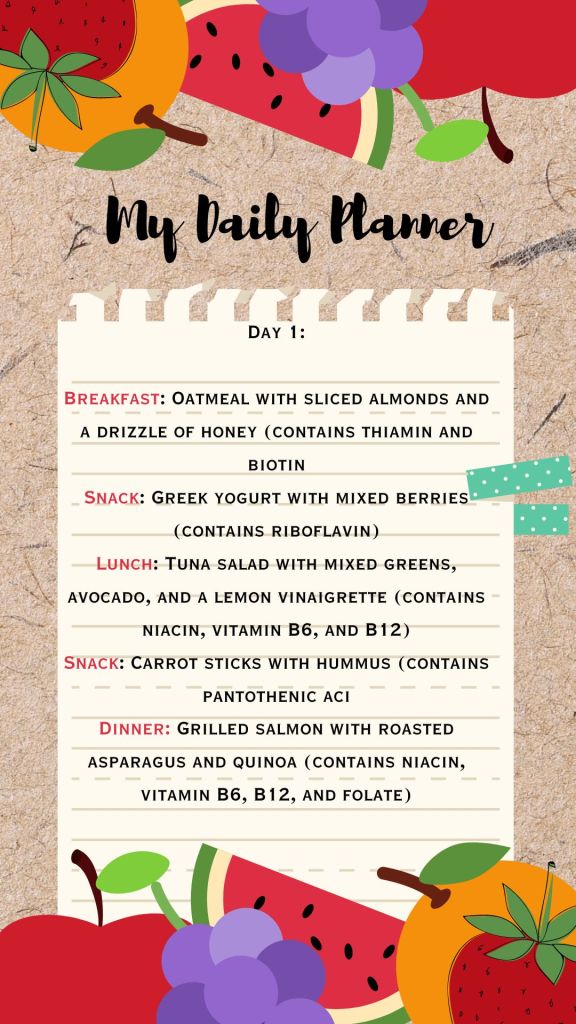
Meal Ideas
If you’re looking to boost your vitamin B intake, incorporating vitamin B-rich foods into your meals is a great way to do it. From breakfast to dinner, there are a variety of delicious meal options that can help you reach your daily recommended intake of B vitamins. In this section, we’ll provide some tasty and easy-to-make meal recipes that are packed with vitamin B, so you can enjoy the benefits of these essential nutrients while satisfying your taste buds.
Conclusion
In conclusion, incorporating vitamin B into your diet and lifestyle can have numerous benefits for your overall health and well-being. From boosting energy levels and supporting brain function to improving skin and hair health, vitamin B is essential for many of our body’s processes. By following the tips and meal ideas mentioned earlier, you can easily increase your vitamin B intake and enjoy the benefits of a healthy and balanced diet. Remember, small changes in your diet and lifestyle can have a big impact on your health, so start making those changes today and feel the difference!
 Nourish Wise
Leave a comment